
A guide to how a Solar panel installation works within a net metering model
When talking to many people about Solar panels, a main goal of theirs is “Energy independence”. When we think about energy independence we often imagine living off grid and not ever having to worry about dealing with an electricity provider like Maritime Electric in PEI.
While it’s nice to think about full independence it often comes with a level of insecurity: “What happens if I don’t produce enough energy to power my home?”
This conjures up thoughts of sitting at home watching the movie ‘Scream’ late at night and just as Ghostface threatens Sydney on the phone your power goes out. You are no longer in a state of Netflix and chill, you're now in a state of panic and frustration.
This is where net metering works way better!
Net meter and chill will allow you to Netflix and chill!
What is Net Metering?
Net metering is where you produce electricity from solar panels throughout the day and use most of it but the rest goes to your local provider, like Maritime Electric. This excess electricity gets banked as credits. When you need that electricity (like when watching scary movies) you will automatically get it from the grid. That draws down your credits, and if you use more than your credits, the electricity company will just charge you for that little bit of usage you did not have covered by your solar panels.
The details
Main Steps and Components
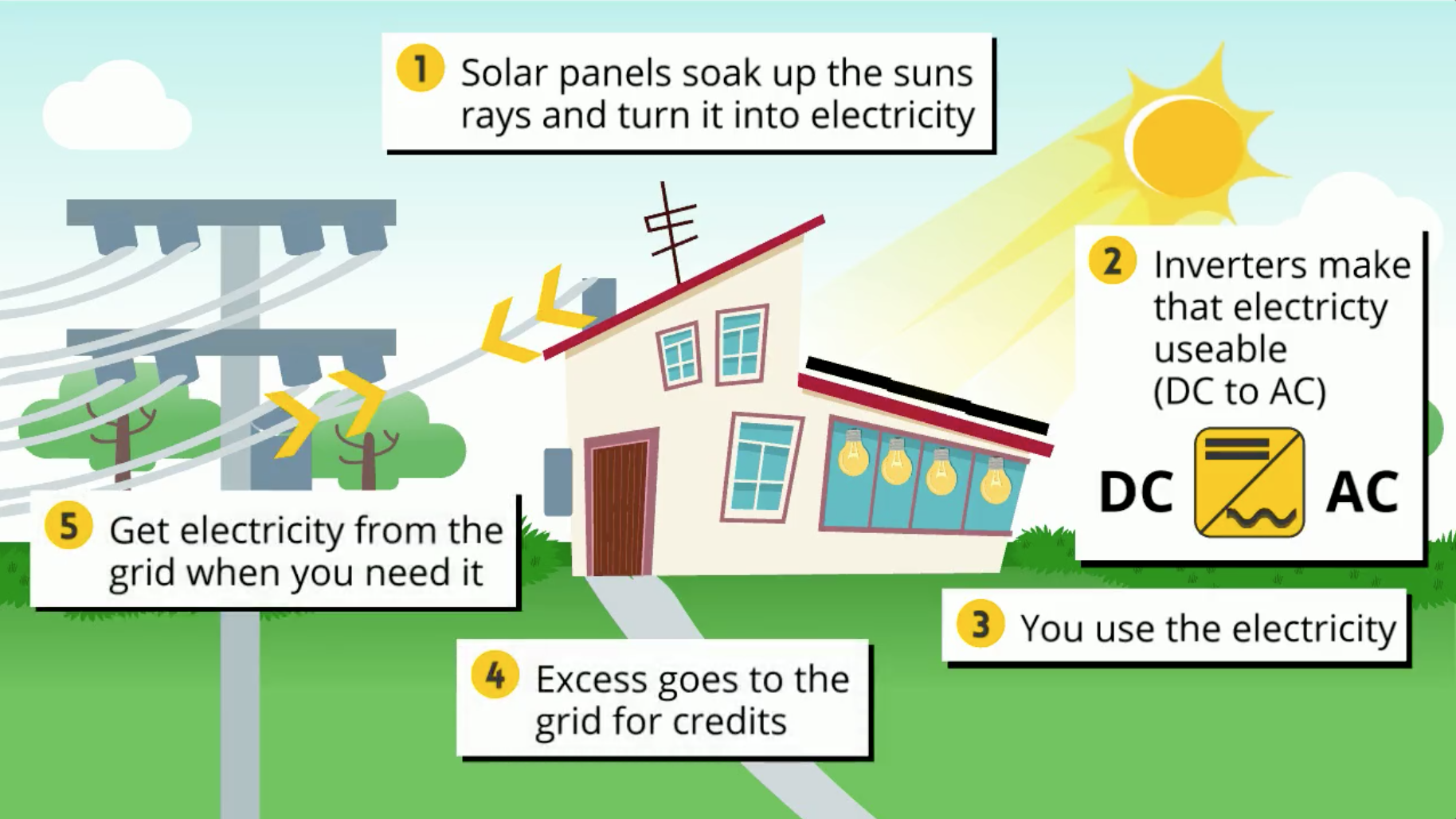
1.Solar panels soak up the sun’s rays and turn it into electricity
The main components used to soak up these rays of sun coming onto your rooftop net metering system actually go on the roof of your house. That’s where the panels will be attached and also the micro inverters which go underneath the panels. They’re attached to the roof using a racking system that attaches to the structure of the roof and uses flashing to protect for leaks.
2. Inverters make that electricity usable (DC to AC)
From the micro inverters on the roof the wires come down to a load centre and then a solar disconnect before they head to the main panel in your house.
3. You get to use the electricity
From the disconnect on the outside of your house your net meter system will actually be connected to the main panel in your home. The breaker and main line for the solar PV system is in your home. We size both of these for the system size that we have installed on your home. This is how the system will supply your home with electricity before it ever uses anything from the grid!
4. Excess goes to the grid for credits
From the main panel in your house, your net meter system will connect to a meter. In most areas in Canada we replace a single direction meter base with a dual direction meter. So the meter itself will be popped off by your utility company and they will replace it with one that works in both directions. That way they can measure how much power you are pulling from the grid and how much power you are pushing to the grid from solar.
From here they will calculate the credits that you accumulate on your electric bill.
5. Get electricity from the grid when you need it.
At times when no electricity is being produced from solar (like at night) your home will source electricity from the grid. This is when the bi directional meter will start counting your usage.
In locations like PEI they actually install 2 meters. One for the power coming into your home and one for the power that solar is pushing back into the grid.
Which Provinces Offer Net Metering?
Here's how net metering works in the provinces Sunly serves:
New Brunswick
Net metering is offered to customers of NB Power, allowing them to generate their own electricity while remaining connected to the grid and selling back their excess electricity.
Nova Scotia
Nova Scotia Power customers can install a solar system of 27 kilowatts or less as of right, without joining a utility program. Nova Scotia Power buys the extra power the system sends to the grid at a rate equal to the rate the customer pays, up to the home's total use for the calendar year. Here's how that works for solar panels in Halifax.
Ontario
Net metering is just one of the various programs that the Ontario government has in place, encouraging residents to make the switch to renewable energy. Those interested should contact their utility to confirm that they are eligible.
Prince Edward Island
PEI’s Maritime Electric provides net metering for eligible residents. More than 1,000 residents are part of the program, allowing them to lower their energy costs while helping the environment. More are sure to follow.
The benefits of Net metering
While we all dream of being completely energy independent, net metering is the best option to give you peace of mind that when watching scary movies the only thing to be scared about is running out of popcorn.
Net metering allows you to have a sense of energy independence in which you can reduce your reliance on purchasing electricity at rates that continue to increase, while maintaining a relationship with your provider to ensure that you never run out of energy!
It is the best of both worlds so you can binge watch all 4 Scream movies and even the one that’s coming out this year too!
Now that we took away some of those fears of going solar, why not talk to us about taking the next step and getting solar for yourself? We are happy to speak with you and help you remove any other concerns you may have.
Net metering is a game-changer for solar energy users, allowing you to earn credits for excess energy your system produces and use them when you need power most. It’s a win-win for your wallet and the environment! Ready to take advantage of net metering and solar energy? Visit Sunly.ca to explore your options, learn about solar panel costs, or contact us for expert advice. Check out our customer reviews to see why homeowners trust Sunly, and find out how many solar panels you might need for your home. Go solar, net meter, and chill with confidence!
More Reading: Are Solar Panels Worth it in Canada?